
Why Is Pahadi Baba Ghee Daanedaar? The Secret Behind Its Grainy Texture and Purity
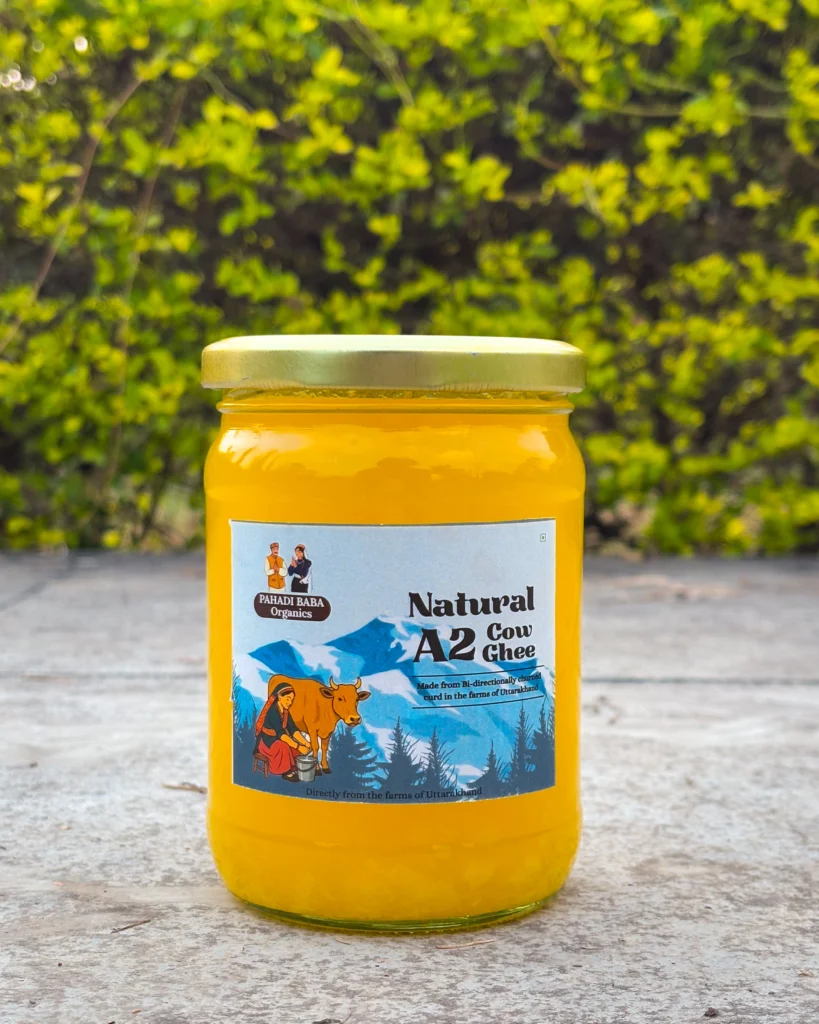
If you’ve ever opened a jar of Pahadi Baba A2 Desi Cow Ghee and noticed its beautiful grainy texture, you might have wondered — is this normal? Why doesn’t it look smooth like factory-made ghee?
The answer is simple: the “daanedaar” or grainy texture is a mark of purity, tradition, and quality. It’s how real, hand-churned ghee has always looked in Indian homes for generations.
Let’s uncover why the grainy texture of Pahadi Baba Organic Ghee is a sign of authenticity — and why it’s better than the smooth, refined versions you often find on store shelves.
🌾 The Science Behind the Daanedaar (Grainy) Texture
The grainy texture in ghee comes from a natural process called crystallization. When the pure fats (triglycerides) in ghee cool down slowly, they form tiny crystals — those grains you see and feel.
This happens naturally when the ghee is cooled at the right temperature (22–25°C) — neither too fast nor too slow.
At Pahadi Baba Organics, our ghee is made traditionally using the Bilona method, where it is hand-churned from curd and then allowed to cool gradually at room temperature. This slow cooling process helps form those perfect golden granules, giving your ghee a texture that’s rich, aromatic, and natural.
🧈 The Role of Temperature in Perfect Ghee
Temperature plays a crucial role in creating that authentic danedaar texture.
- ❄️ If ghee is cooled too quickly, it becomes smooth and loses its natural grain structure.
- 🌤️ If cooled slowly at room temperature, it allows proper crystallization, resulting in a beautiful granular texture.
At Pahadi Baba Organics, we pour freshly made ghee into jars while it’s still warm and let it cool naturally. This ensures the ghee remains pure, rich, and full of nutrients — just like the traditional Uttarakhand ghee your grandmother swore by.
💛 Why the Texture of Ghee Matters
The grainy texture of Pahadi Baba A2 Bilona Ghee isn’t just about appearance — it’s proof of purity and authenticity.
When you see those grains, it means your ghee:
✅ Hasn’t been mixed with palm oil, vanaspati, or artificial fats
✅ Is made from pure A2 milk of native Indian cows
✅ Has been hand-churned using the traditional Bilona method
✅ Retains its natural aroma, flavor, and nutrition
On the other hand, smooth, waxy ghee is often the result of factory processing, refining, or artificial blending — which strips away its nutrients and traditional qualities.
🏔️ Pahadi Baba Ghee: Tradition from the Hills of Uttarakhand
Our ghee comes from the pure and pristine valleys of Uttarakhand, made using A2 milk from native cows and the age-old Bilona process.
The daanedaar texture you see in every jar of Pahadi Baba Organic Ghee is proof that:
- It’s pure and unrefined
- It’s crafted traditionally, not industrially
- It’s rich in healthy fats, vitamins, and antioxidants
Each spoonful carries the flavor of the Himalayas and the purity of nature, ensuring you get the best of health and taste — just the way it’s meant to be.
🌿 Why Choose Pahadi Baba Organic A2 Ghee
- 🐄 Made from pure A2 Desi Cow milk
- 🔄 Prepared using the traditional Bilona churning method
- 🌾 Naturally grainy (daanedaar) texture — a mark of real purity
- ❌ No preservatives, chemicals, or artificial flavors
- 🌄 Sourced directly from the clean farms of Uttarakhand
When you open a jar of Pahadi Baba Ghee, you’re not just opening a product — you’re embracing a piece of Indian tradition, purity, and mountain goodness.
✨ In Short
- Daanedaar ghee = pure, traditional, and naturally made.
- Smooth ghee = refined, processed, and often adulterated.
- Pahadi Baba Organic Ghee = authentic, nutritious, and crafted with care.
BUY Real From Pahadi Baba Organics Now !!!